Mental Health Therapist Marketing Trends to Watch in 2026
Table of Contents
Why 2026 looks different
Trend 1: Search behavior is shifting again
Trend 2: AI-assisted therapy content is the new norm
Trend 3: Video becomes a trust signal
Trend 4: UX upgrades matter more than branding
Trend 5: Local gets even more personal
Trend 6: Google Ads get essential for growth
Trend 7: Website templates built for therapists speed things up
How to stay ahead
FAQs
Ways 2026 Will Be Different
If you run a therapy practice, you probably feel the shift already. More people search for support online. More people ask questions before they book. And more therapists are building an online presence that feels warm, not corporate.
2026 is about clarity + trust
Here’s what you need to know:
Ongoing trend: you need good niches
Get clear on your niche.
And find one that has demand.
But isn’t too crowded.
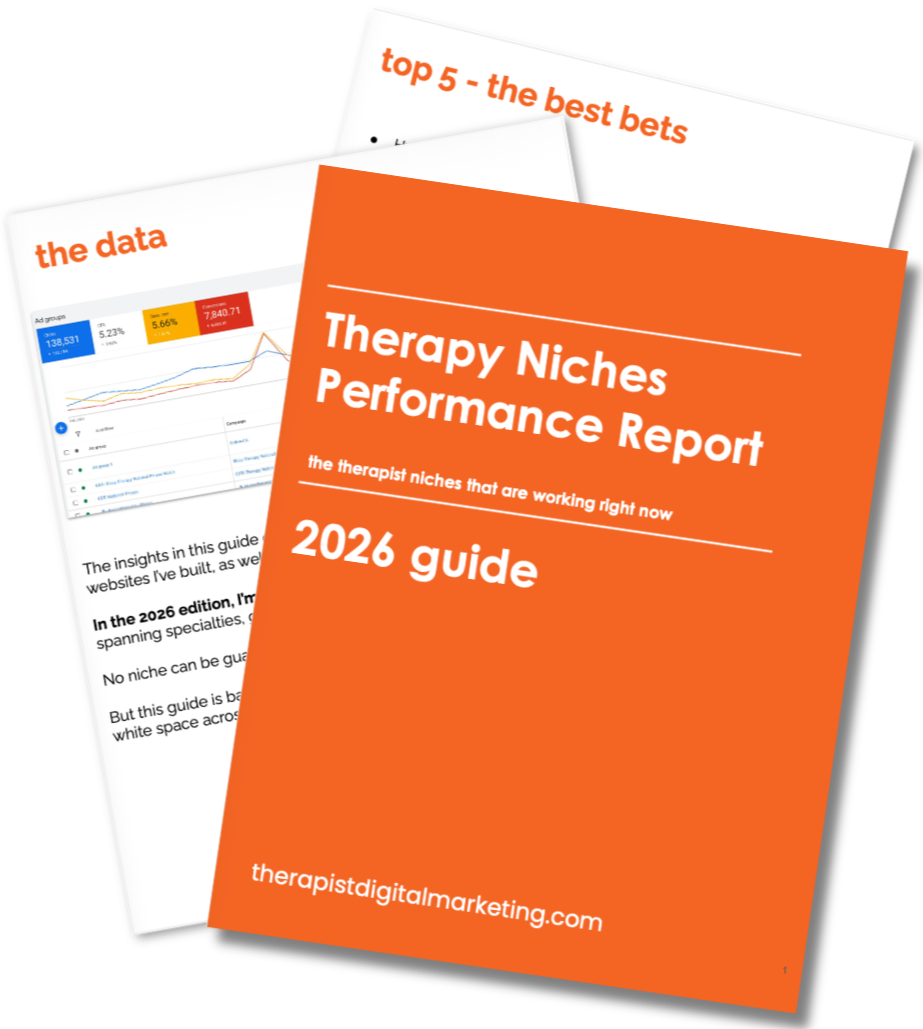
Niching down helps you answer the questions that actually matter:
Who do you help?
What problem are they trying to solve?
What language are they already using to search for support?
And is this a niche people are actually looking for online?
Whatever your niches are , the way you tell your story online can make all the difference.
Not because every therapist needs to become hyper-specific forever. But because unclear marketing makes everything harder. Your website gets harder to write. Your service pages feel vague. Your ads become more expensive. And potential clients land on your site without immediately knowing, oh, this person gets what I’m dealing with.
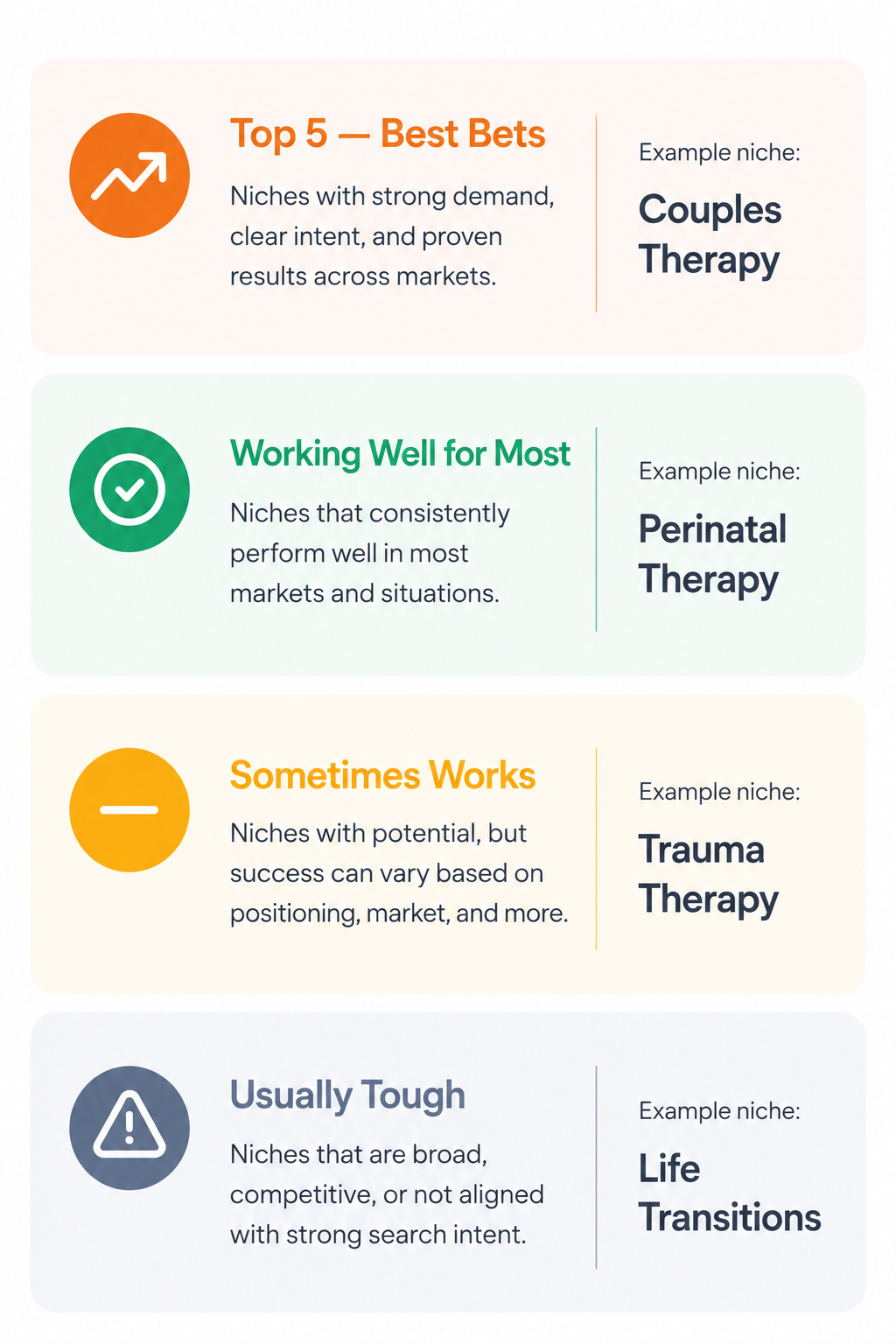
“Is there demand but lower competition?”
Some therapy niches work really well online. Some can work, but only with the right positioning. And some rarely work because people either don’t search for them, don’t identify with the language, or need a different path to find you.
I ranked 63 different therapy niches by whether they sometimes, usually, or rarely work, based on what I’ve seen across my therapist clients.
If you’re trying to figure out what pages to build, what specialties to highlight, or what kind of clients your website should speak to first, start there.
Then, once your niche is clearer, the rest of your marketing gets much easier. Your website can be simpler. Your content can be more specific. And your ads can point people to pages that actually match what they’re searching for.
Trend 1: Search behavior is shifting again

Search engines keep changing how they rank mental health content, and 2026 pushes this even further.
Here’s what stands out:
People use longer, conversational questions.
”How do I know if I need trauma therapy” / “therapist near me who gets anxiety in adults.”Google is giving more visibility to local, helpful, human answers.
Visitors spend less time reading long pages. They skim, then decide fast.
What this means for you: Write like a human, not a textbook.
DO NOT LET THE SEO TAIL WAG THE DOG.
WRITE FOR HUMANS.
Keep your site simple to scan. Use clear headings. And make sure each service page answers the top five questions your clients ask.
If you don’t have a site that’s easy to read or navigate, start there. Squarespace website templates for therapists follow these rules and help you launch faster without learning UX.
Trend 2: AI-assisted therapy content is the new norm
People expect quick answers. They want clarity before they book. And therapists who create consistent content get more traffic and inquiries.
AI tools don’t replace your voice, but they help you:
outline ideas
simplify explanations
write posts faster
The key is to keep your content grounded in your real clinical approach. Keep examples simple. Don’t use jargon. And speak directly to the client’s lived experience.
You still need the human touch. The AI part just helps you save time.
Trend 3: Video is a trust signal + builds connection
Video keeps growing, and in 2026 it becomes one of the strongest trust builders in marketing for mental health therapists.
You don’t need a studio setup. You just need clarity:
Introduce yourself - be casual! You want to put people at ease
a nervous or stiff video does more harm than good in attracting clients
Explain who you help
Share one simple insight at a time
Offer a next step
People want to see the person they may sit with. Even a 20-second clip builds more trust than a long paragraph.
If you want to add something extra to your content, embed short YouTube clips. Good options include simple psychoeducation videos like this one:
Trend 4: Good UX + function design matters more than “looking nice”
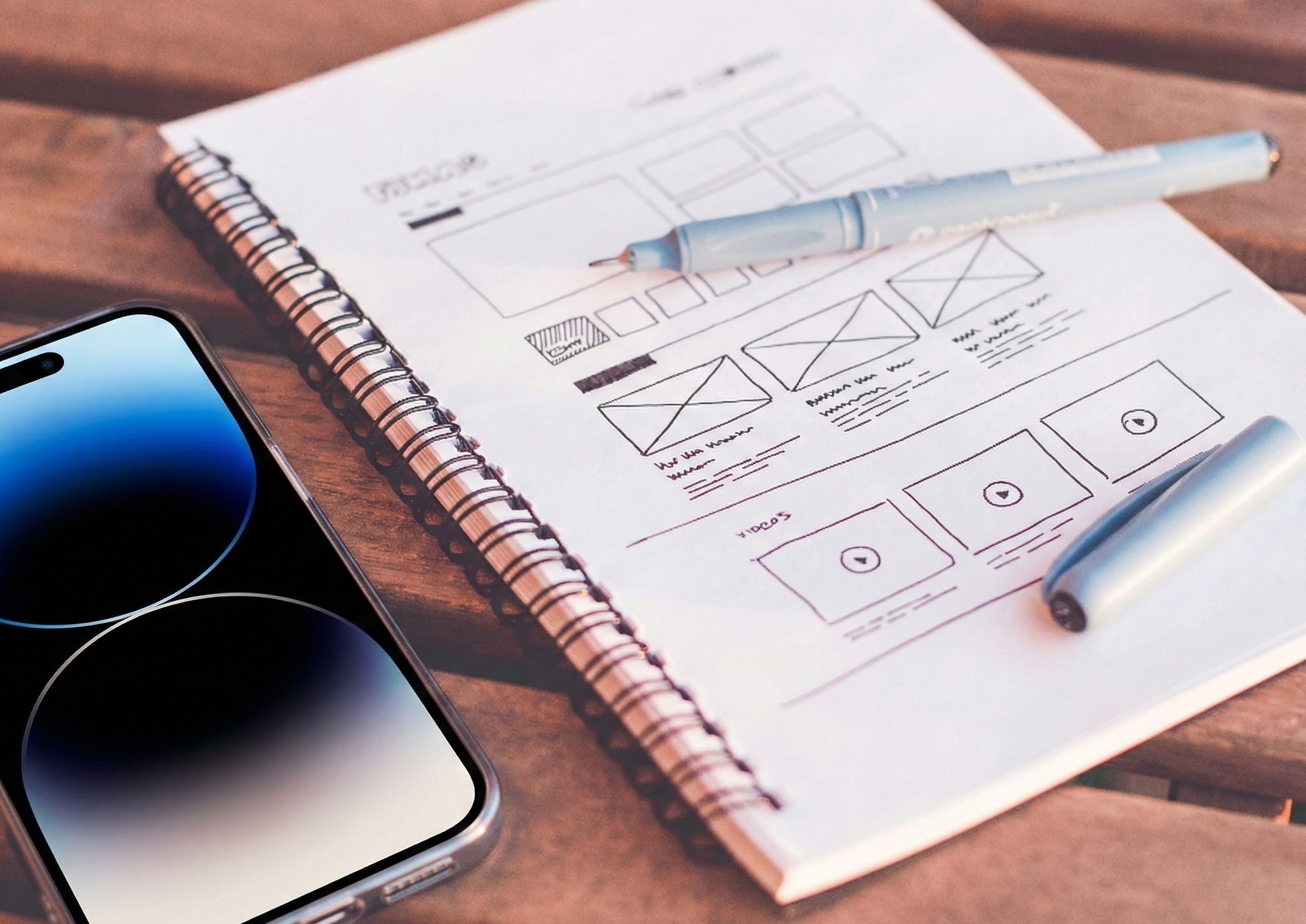
This is one place where therapists lose clients without realizing it.
In 2026, visitors make decisions in less than six seconds.
If they can’t find what they need, they leave.
Here’s what users want right away:
a clear header
a short intro about who you help
your location
insurance info
fees
a button to book a consult
“Good design is how things work. And that always works better than pretty.”
It’s also why my Squarespace therapist templates put key info near the top of the page. Your site shouldn’t make visitors think. It should guide them.
Good UX also increases SEO. Google tracks how long people stay on your site. If your page is easy to use, people stick around.
Trend 5: Local gets even more personal
Local search rules keep evolving, and Google now expects:
detailed service pages
neighborhood-level keywords
clear NAP info
strong internal linking
Google Business Profile updates at least once a month
Think simple:
“anxiety therapy in Denver”
“Online EMDR therapist in DC”
“teen therapy in Austin”
Add this naturally into your website copy, not in a forced way.
Internal linking helps too. Examples of this I would use in my business are links like:
“See how my Google Ads for therapists service works”
“Browse pre-built site designs” → https://www.therapistdigitalmarketing.com/squarespace-website-templates-for-therapists-psychologists
These links help users move through your site without feeling pushy.
Trend 6: Google Ads gets essential for finding clients

The BetterHelps of the world’s and their SEO teams mean organic search is slower for the little guys. And Google Ads fills that gap.
Here’s what’s changing in 2026:
Ad costs rise, but conversion rates rise too because users are searching more specific terms.
Performance Max and Smart campaigns remain unreliable for therapists.
Manual structure still wins when it’s set up right.
Landing pages matter more than keywords.
When you run Google Ads, send people to a clean, simple, detailed page with one clear next step. That’s it.
Trend 7: Website templates built for therapists speed things up
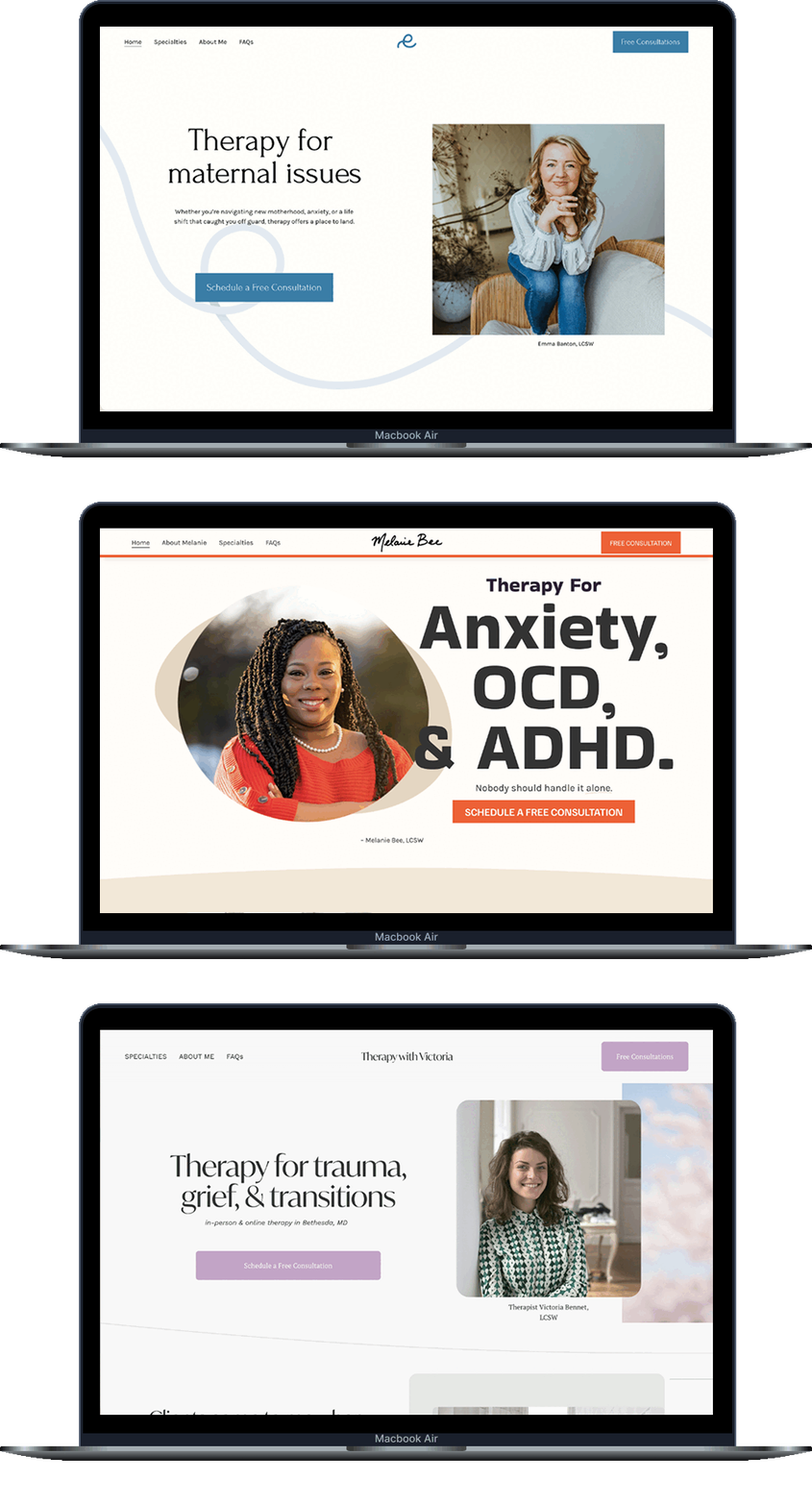
More therapists want to skip DIY overwhelm and launch quickly.
In 2026, pre-built UX-led templates become one of the easiest ways to stand out.
Good templates do two things:
Shorten setup time
Help you communicate clearly
Good website templates keep things simple. They guide your readers. And they already follow 2026 best practices.
Browse some templates here:
https://www.therapistdigitalmarketing.com/squarespace-website-templates-for-therapists-psychologists
Wrap Up: how to stay ahead
Stay focused on clarity. Stay focused on trust. And keep your marketing simple.
Here’s what helps most therapists:
Niching down - my how-to guide is HERE
Update your service pages
Keep your Google Business Profile active
Use video as an intro sales call. No more than 60 seconds.
Run Google Ads if you want steady inquiries
Use clean UX so people understand you fast
Write content that sounds like you
You don’t need more. You need clearer.
If you want a starting point, check out my therapist website templates. They’re built for this exact shift and save you a lot of time.
FAQs
-
Clear website messaging and using video the right way. Google Ads helps if you want inquiries right away.
-
Once a month is fine. Focus on clarity over volume.
-
A blog can helps your SEO, but SEO is really hard and at this point a nice to have not a need to have. Only post if your articles answer real client questions but remember - that goes out to the entire internet, not just the state you’re licensed in.
-
Yes, but treat it as a touchpoint, not your main marketing channel. You need Reels to reach new audiences, your static posts are probably a waste of time (sorry!)
-
Clean layouts with simple navigation that go in depth about your specialties + niches.
-
If you’re copying + pasting from ChatGPT, your readers can tell and THAT DINGS TRUST.
Use AI to help outline ideas. Keep your voice human.
