Google Ads for Therapists: How To + What Actually Works (2026)
Google Ads can be a straight line between you and people with high-intent, looking for therapy.
It can also be a fast way to burn money when the setup or website are sloppy.
My guide shows you how to run Google Ads in a way that makes sense for a private practice therapist. You'll learn what to budget, what to track, what keywords to use, and what usually gets missed
And if you read this and think, "cool, i don't want to learn all this," I'll show you the simplest way to get help without handing your account to a random agency.
👨🏻💻 Why believe me? I worked at Google for 9 years.
Let’s go!
Table of contents
What Google Ads is and when it makes sense
What therapists should spend on Google Ads
The "before you spend a dollar" checklist
Campaign setup that works for private practice
Keywords, match types, and negative keywords
Ads that get clicks without sounding salesy
Landing pages that turn clicks into consults
Conversion tracking for therapists (calls and forms)
Using a Google Ads specialist
FAQ
Related articles
“Google Ads can only work as
well as your website does”
What Google Ads is and when it makes sense for a therapist
Google Ads puts your listing at the top of the search results when someone types something like:
"anxiety therapist near me"
"EMDR therapist brooklyn"
"couples counseling chicago"
You pay when someone clicks or calls from the ad, depending on your setup. Google Help
So when does it make sense for therapists?
Google Ads makes sense when:
• The website is already bringing in leads
• You’re niched down
• You want inquiries now, not in 6 months
• Your website has individual pages per specialty / niche
• You can follow up quickly (same day is ideal)
It's a rough fit when:
• The website is generic, thin, outdated, or “just not bringing people in”
• You're targeting terms like "anxiety" across a large area on a tight budget
• You're not tracking form submissions
What therapists should spend on Google Ads
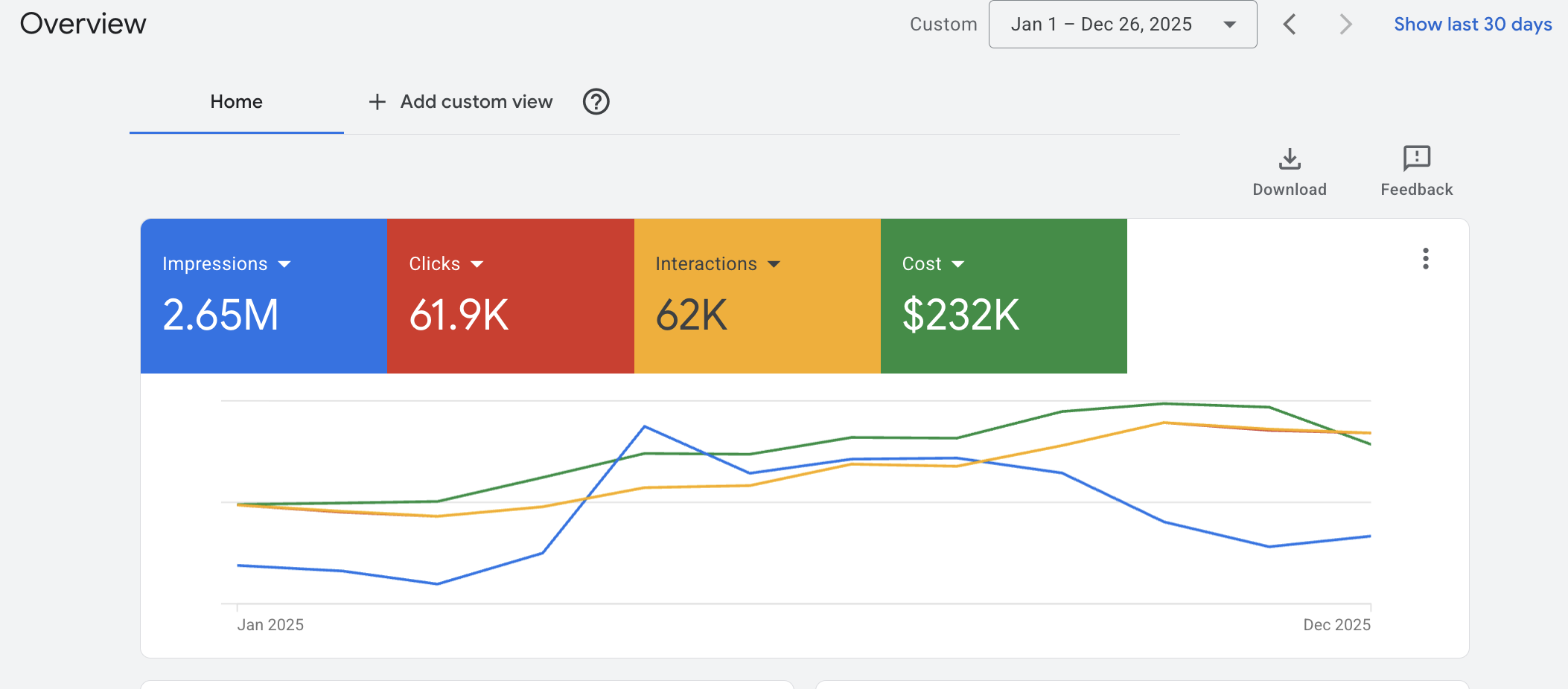
I promise, your Google Ads will not cost this much
There's no universal price. Your market and your niche drive most of it. But benchmarks help you set expectations. Useful benchmarks to know:
WordStream reported an overall average Google Ads CPC of $5.26 in 2025.
A mental health specific dataset from Beacon Media + Marketing (based on 72 U.S. mental health clinics) reported:
• Average CPC $3.74
• 25th percentile $3.11
• 75th percentile $4.82
Most of my therapists spend
$500 a month ($16.66 per day)
$500 a month gives you enough clicks to learn what's working, especially if your CPC lands in the $4 to $8 range.
If your budget is lower than that, you can still run ads, but you need to tighten your geography and keyword list so you're not spreading $10 per day across 40 keywords.
If one new client stays for 8 to 12 months, you can afford a higher cost per lead and afford to be patient. But you only get that clarity if tracking is set up.
Why Google Ad works well for therapy?
There’s a strong return on ad spend (ROAS)
For example: $150/session, average client stays for 52 visits
Return on Ad Spend = (price per session x avg. number of sessions a client stays) / ad spend per new client
(($150 * 52) / $250) = 31.2x return on ad spend
"Before you spend $1" checklist ✅
Google ads just bring website visitors.
And if the website isn’t built to convert visitors into inquiries then ads will waste money.
This is where most therapist campaigns fail and why I no longer will do Google Ads campaigns for websites I have not worked on. Not because Google Ads is broken, but because if the basics aren’t there, we’re just going to be spending money to expose flaws.

Therapist Website Basics
Your site needs to answer these fast:
Who you are
Why someone should remember you
Who you help
Where you're licensed or located
How to contact you
For a shortcut, start with a template for therapists that converts. You can browse those templates here:
Therapist Intake Basics
A website that works JUST AS WELL on mobile as desktop
A way to record conversions
A system for responding asap
“Good design is how things work.”
The campaign setup that works for private practice therapists in 2026
If you want the cleanest setup for therapists, start with a Search campaign.
DO NOT USE A SMART CAMPAIGN. You're targeting people already looking for help.
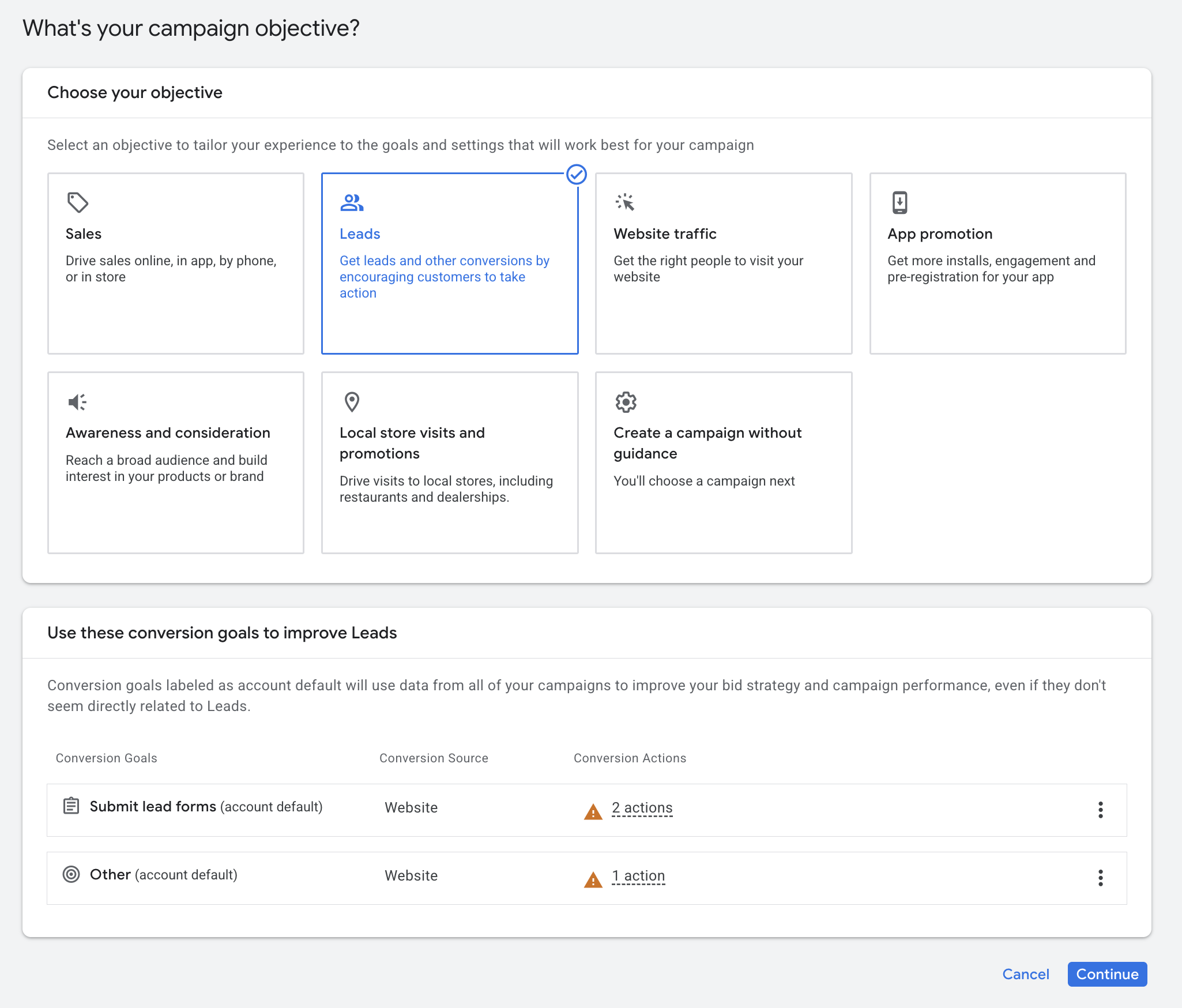
Make sure conversions are set up and select leads
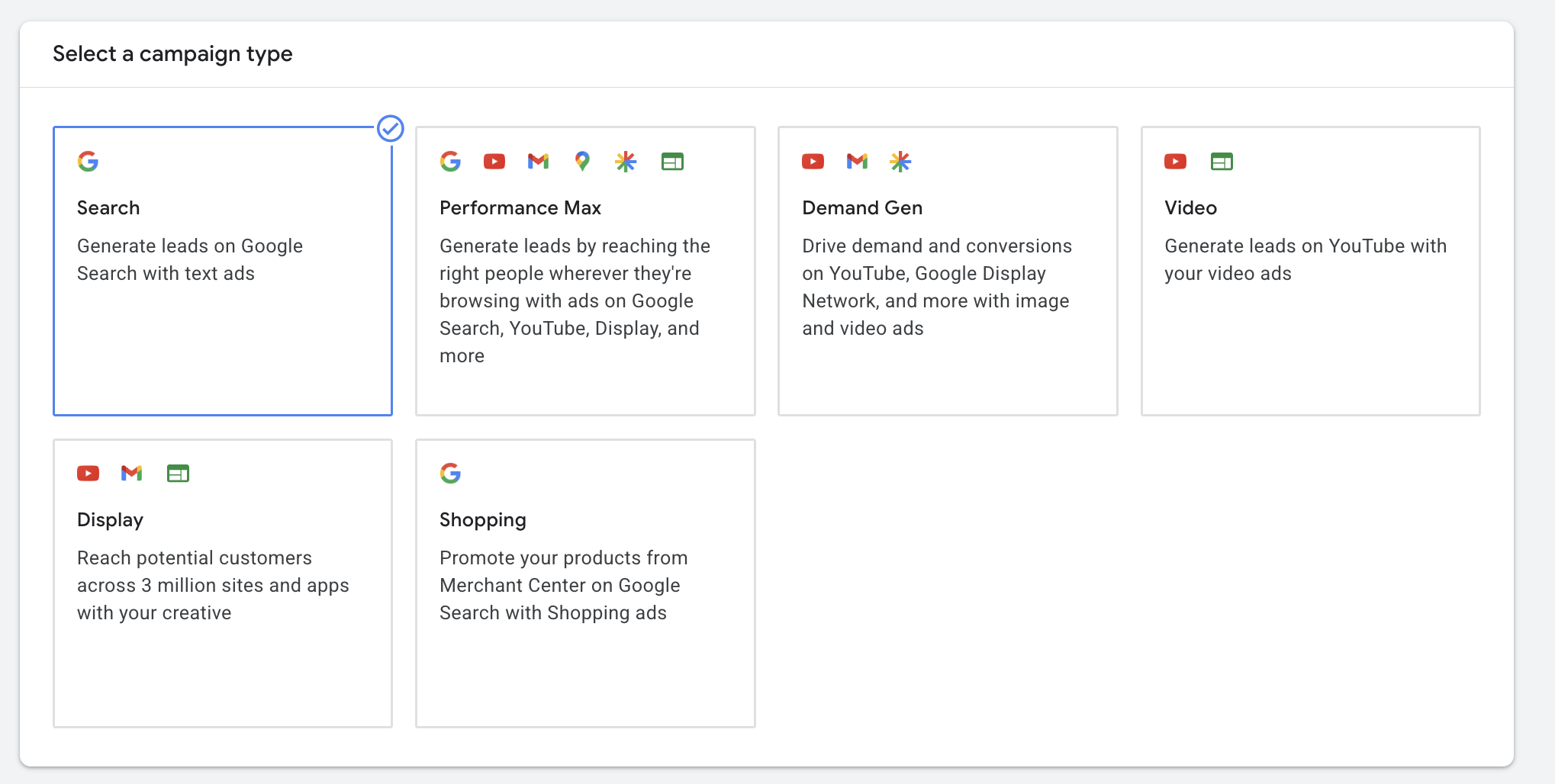
Always use Search - 99.5% of therapists won’t have the assets needed to use Performance Max correctly.
A simple Google Ads account structure 🐴
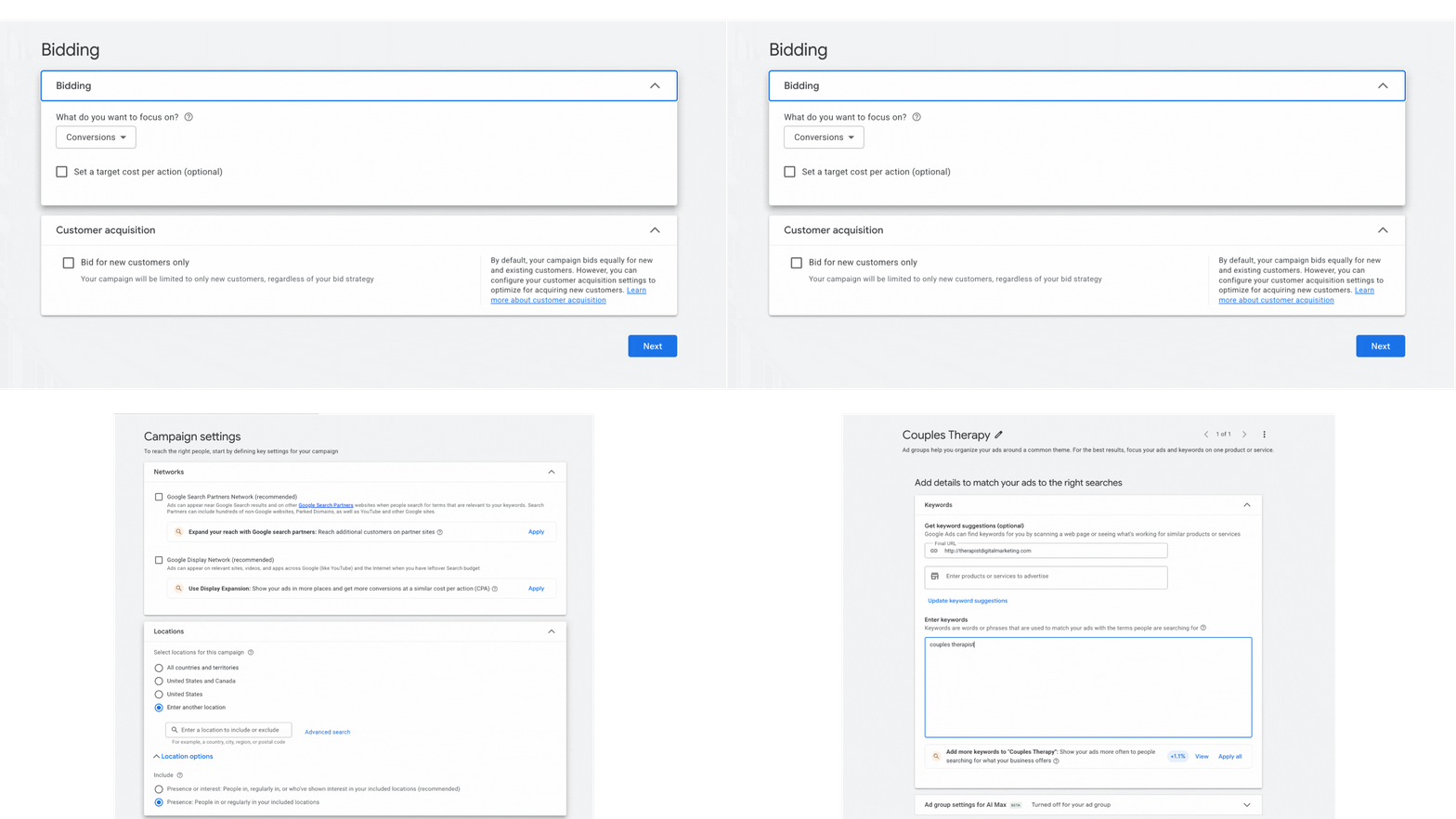
🕵🏻♂️ Focus on conversions, always
Search Partners and Display Network Off
🌎 Campaign Geography:
15 miles around the practice if you’re more in person
Statewide if you’re primarily virtual
Presence: people in or regularly in your included locations
🎯 Location targeting
You’ll waste money if you let Google interpret location loosely.
Simple rule: target where you can realistically serve.
• If you're in-person, keep it tight.
• If you're telehealth, target the state(s) you're licensed in.
Ad groups: 1 per core service
Examples:
Couples therapy
EMDR
Therapy for teens
✅ Each ad group should have:
• tightly related keywords
• one landing page that exactly matches the keywords
• ads that repeat the same language as keywords + landing page
Keywords, match types, and negative keywords
Keywords sound simple until you pay for your first click from someone looking for a massage therapist.
Start smaller than you think 🐙
Start with now more than 10 keywords per ad group. You can expand later once you see real search terms and go for high intent keywords vs mid-funnel keywords
High intent means closer to taking action:
anxiety therapist [city]
couples counseling [city]
trauma therapist [neighborhood]
therapist that accepts [insurance] (only if you actually accept it)

Therapy Negative Keywords to add early and cut junk clicks:
physical
massage
chiropractor
jobs
salary
school
free
who/what/how/when/why
Use your Search terms report weekly and keep adding negatives based on what people actually type.
Writing google ads for therapists that get clicks AND don’t sound cheap
Therapy ads work best when they sound grounded and specific.
What to include in your ad copy
Your name
The practice’s name
The problem you help with
The location or state
One credibility point (years, specialty training, niche)
The next step (schedule consult, request a call)
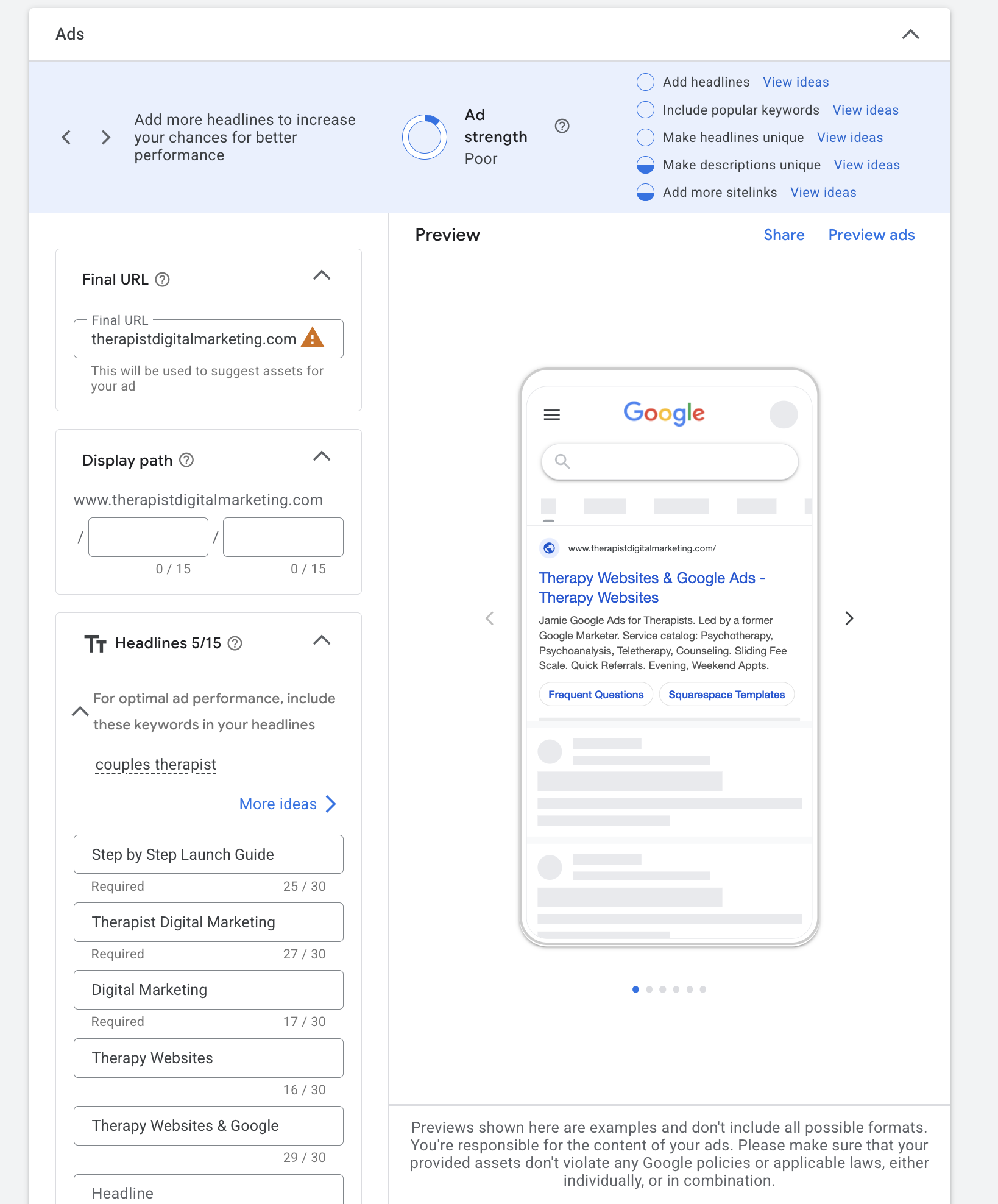
Google Ads for Therapists Headline Examples:
Anxiety Therapy in Austin
EMDR Therapist, Telehealth in NY
Couples Counseling, New Clients Welcome
Google Ad Description Examples:
Warm, practical therapy for anxiety and burnout. Weekday and evening openings. Request a free consult.
Evidence-based therapy for trauma and PTSD. Telehealth available. Start with a short consult call.
Keep it real. Don't promise outcomes.
Website landing pages that turn clicks into consults 🍒
Do not send paid traffic to a generic homepage or a page listing out a bunch of specialties ☹️

A good landing page for therapist ads does 3 jobs:
Confirms the visitor is in the right place
Builds enough trust to take the next step
Makes the next step obvious
*Add Google Ads Conversion tracking for therapists 🐾
*this is mandatory
This is non-negotiable. If you can't measure leads, Google Ad’s AI + machine learning can’t optimize and you can't make data informed decisions.
At minimum, track contact form submissions
Therapist-friendly tracking setup
If you want a clean setup that avoids messy data:
Use Google Analytics 4 for form submissions and key actions
Use Google Ads is tracking conversions
Make sure your thank-you page exists so form tracking is reliable
Using a specialist
If you want a Google Ads system that is done for you and produces consistent inquiries, hiring help often ends up being the cheaper option. No learning curve.
Tips:
Pick a specialist who knows therapy.
Otherwise ads end up feeling generic (at best) and keywords tend to be a mess
Don’t pay extra for setting up conversions - that’s bananas in 2026. Ads CAN NOT WORK without conversion tracking. It’s a sneaky upsell. It’s like selling you a car without wheels on it.
FAQs
-
Yes, if your targeting is tight, your website converts, and you track forms.
Without those, it often looks like Google "doesn't work."
-
A common starting test budget is around $16 per day for 30 to 60 days, then adjust based on cost per lead and bookings.
-
A headline that matches the search, who you help, how you work, practical logistics, and a clear next step. Keep it simple and direct.
-
They do different jobs. Ads create speed and control. SEO compounds over time. SEO is getting really crowded as Psych Today and companies like BetterHelp have dedicated teams.
Many practices do both, but ads are usually the faster path when you need inquiries now.
Related Links (internal)
Google Ads services for therapists and psychologists:
https://www.therapistdigitalmarketing.com/google-ads-for-therapists-and-psychologists
Squarespace website templates for therapists:
https://www.therapistdigitalmarketing.com/squarespace-website-templates-for-therapists-psychologists
The Melanie template:
https://www.therapistdigitalmarketing.com/melanie-bee-therapist-website-template-squarespace
The Victoria template:
https://www.therapistdigitalmarketing.com/victoria-therapist-website-template-squarespace
Helpful External References
Google Ads Help on clicks and costs
Google Ads Help on measuring calls
PageSpeed Insights (check your landing page speed)
