63 Therapist Niches Ranked — What’s In Demand Right Now
63 therapy niches ranked by marketing performance data
I ranked 63 therapist niches. Not because therapists need another giant list of therapy niche ideas because other niche advice is too airy.
The standard advice skips the part that matters for marketing a business:
Does anyone search for it on Google?
Do clients understand it?
Does it bring inquiries?
Does it help you stand out on PsychToday every other therapist saying they work with anxiety, depression, trauma, relationships, and life transitions?
So I made a free Therapy Niche Performance Report. It ranks 63 therapist niches based on patterns I see across 770+ therapy ad groups, therapist websites, different budgets, different markets, and different practice types.
No niche works every time (sorry!)
But some niches have clearer demand. Some convert faster. Some are just harder to market, even when the clinical work is good.
That is what the report shows.
Table of contents
Why I ranked 63 therapist niches
What “ranked” means here
The full list of 63 therapy niches
Why some niches work better online
Why broad therapy niches are hard
FAQs
“Broad niches usually have more competition.”
Why I ranked 63 therapist niches 👨🏻💻
My therapist clients ask me about niches all the time.
Usually some version of:
“What niche should I choose?”
“Do I need a niche to rank on Google?”
“Is anxiety too broad?”
“Can I have more than one specialty?”
“Should I delete my old niche pages?”
“Which therapy niches are actually in demand?”
I get why people spend a lot of time thinking about it - the niches to market is a big decision.
It feels like you are choosing the whole future of your practice.
But you are not.
Your niche is not a legal contract with the internet, it’s a direction for this season.
Maybe you are:
leaving a group practice.
getting off insurance.
trying to fill a few cash pay spots.
want fewer mismatched consult calls.
using a website that’s getting traffic, but the wrong people are reaching out.
A good niche makes building your business easier.
But only when the niche is specific enough to mean something and broad enough that people are searching for it.
That is the balance most therapists miss.
What “ranked” actually means
When I say I ranked 63 therapist niches, I am not ranking their clinical value.
That would be ridiculous.
Anxiety therapy is clinically valuable.
Depression therapy is clinically valuable.
Grief therapy is clinically valuable.
Family therapy is clinically valuable.
My rankings is their digital marketing performance. 📈
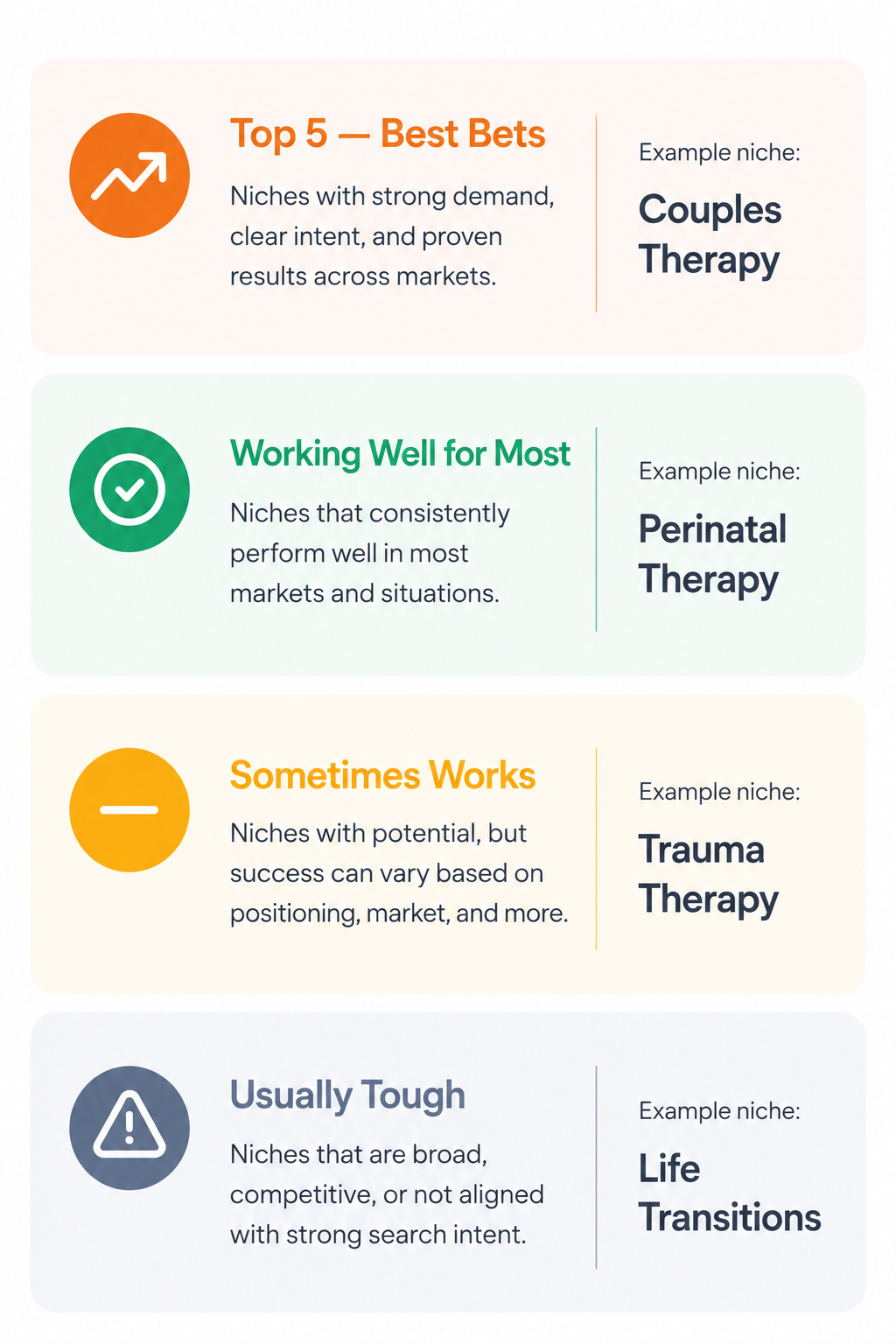
In the report, I group niches by how they tend to perform as website pages and Google Ads targets. The guide uses three buckets: consistently tough, context dependent, and strong across markets.
That means I am looking at things like:
Does this niche get inquiries faster than average?
Do clients know how to search for it?
Is it too broad and competitive?
Is it so specific that almost no one searches for it?
Does it have emotional urgency?
Does it help a therapist stand out?
Does it belong on its own website page?
That is it - just easier or harder marketing.
And that distinction matters because you can be excellent at a niche that is hard to market.
You just need to know that before you build your whole website around it.
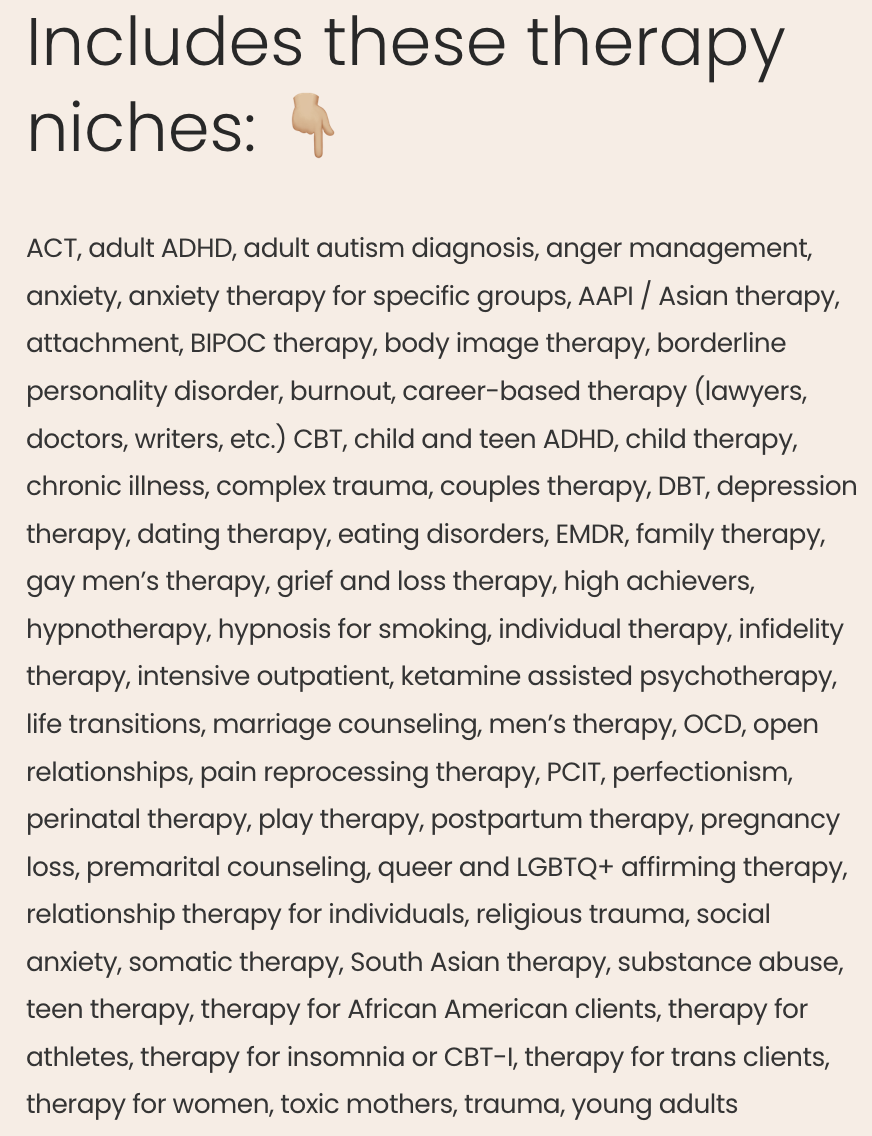
The 63 therapy niches ranked by demand inside the Therapist Niche Report 🎯
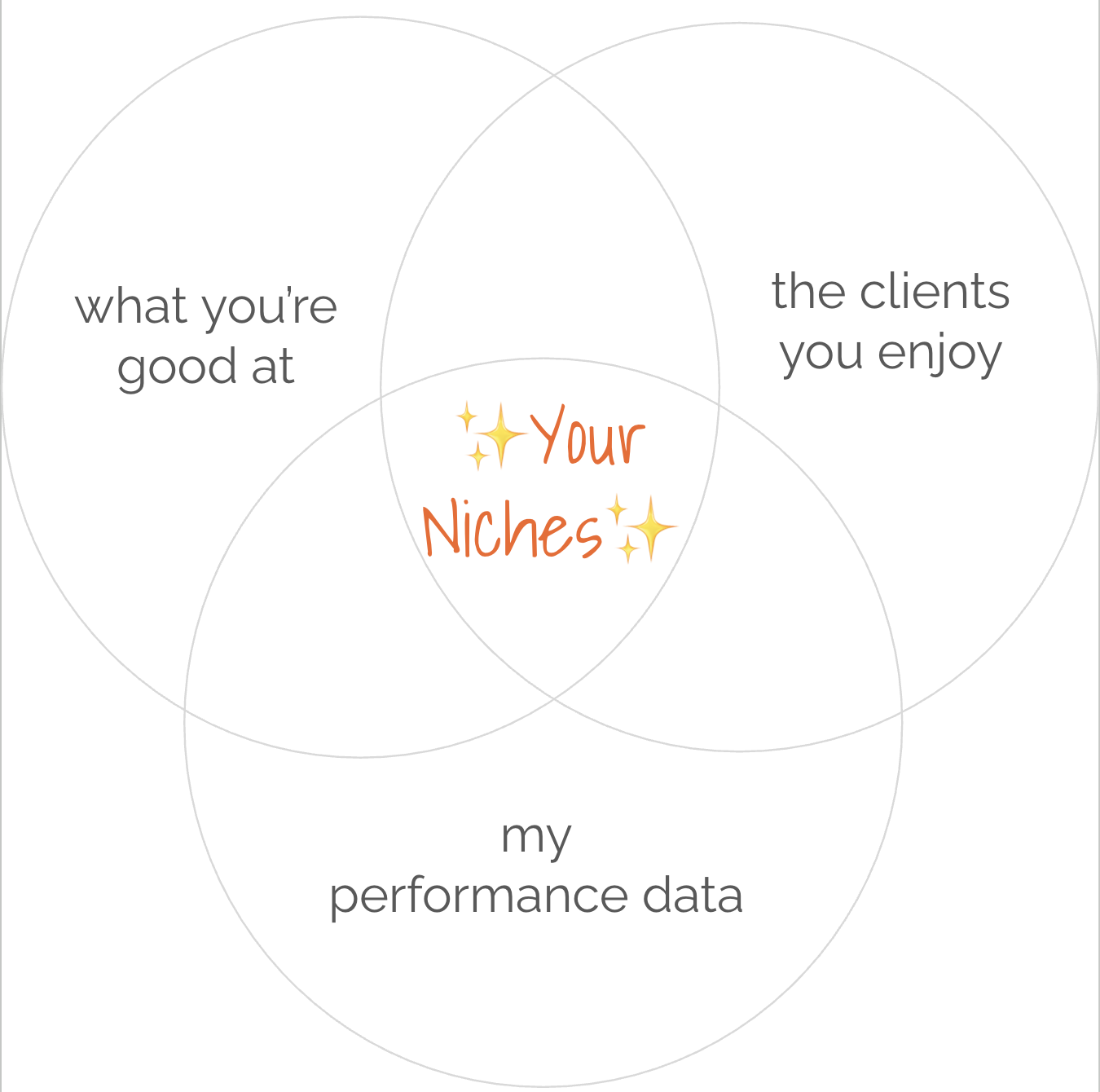
A good niche sits at the overlap of three things.
What you are good at.
The clients you enjoy.
What people are actually searching for.
Anxiety, mood, and emotional regulation
Anxiety
Anxiety therapy for specific groups
Social anxiety
OCD
Perfectionism
High achievers
Depression therapy
Anger management
Burnout
Borderline personality disorder
ADHD, autism, and neurodivergence
Adult ADHD
Child and teen ADHD
Adult autism diagnosis
Trauma, attachment, and family of origin
Trauma
Complex trauma
EMDR
Somatic therapy
Attachment
Toxic mothers or narcissistic parents
Religious trauma
Relationships, dating, and couples therapy
Couples therapy
Marriage counseling
Premarital counseling
Infidelity therapy
Dating therapy
Relationship therapy for individuals
Open relationships
Family therapy
Children, teens, and young adults
Child therapy
Teen therapy
Young adults
Play therapy
PCIT
Pregnancy, postpartum, and reproductive mental health
Perinatal therapy
Postpartum therapy
Pregnancy loss
Identity and culturally responsive therapy
AAPI or Asian therapy
South Asian therapy
BIPOC therapy
Therapy for African American clients
Queer and LGBTQ+ affirming therapy
Therapy for trans clients
Gay men’s therapy
Men’s therapy
Therapy for women
Health, body, and behavior change
Chronic illness
Body image therapy
Eating disorders
Therapy for insomnia or CBT-I
Pain reprocessing therapy
Substance abuse
Hypnosis for smoking
Career, performance, and life direction
Career based therapy for lawyers, doctors, writers, and similar groups
Therapy for athletes
Life transitions
Grief and loss therapy
Therapy modalities and treatment approaches
ACT
CBT
DBT
Hypnotherapy
Ketamine assisted psychotherapy
Broad therapy categories
Individual therapy
Intensive outpatient
Some of these are strong all geographies.
Some work well for certain therapists, but need better positioning.
Some are meaningful clinically, but rougher online.
You do not need another list.
You need to know what is actionable on a list.
Why some therapist niches do better online 🥇
A therapy niche works better online when it matches how clients think.
I was finding that therapists often describe their work through training, modality, theory, clinical language, or writing something informational.
Clients describe their pain through real life.
They are not usually searching:
“I need an integrative therapist who works from a relational attachment based lens.”
They are searching because they’re asking themselves:
“Why can’t I sleep?”
“Why do I keep picking emotionally unavailable people?”
“Why am I behind all my friends?”
“Why do I hate my husband after having a baby?”
“Why do I look successful but feel like I’m falling apart?”
Those are very different Google Search terms.
And your website needs to bridge the gap.
You can still:
talk about your training.
name your modalities
explain your clinical approach.
But the first job is to match the client so they know they landed in the right place while simultaneously being where fewer therapists are.
The best performing zone 🏆
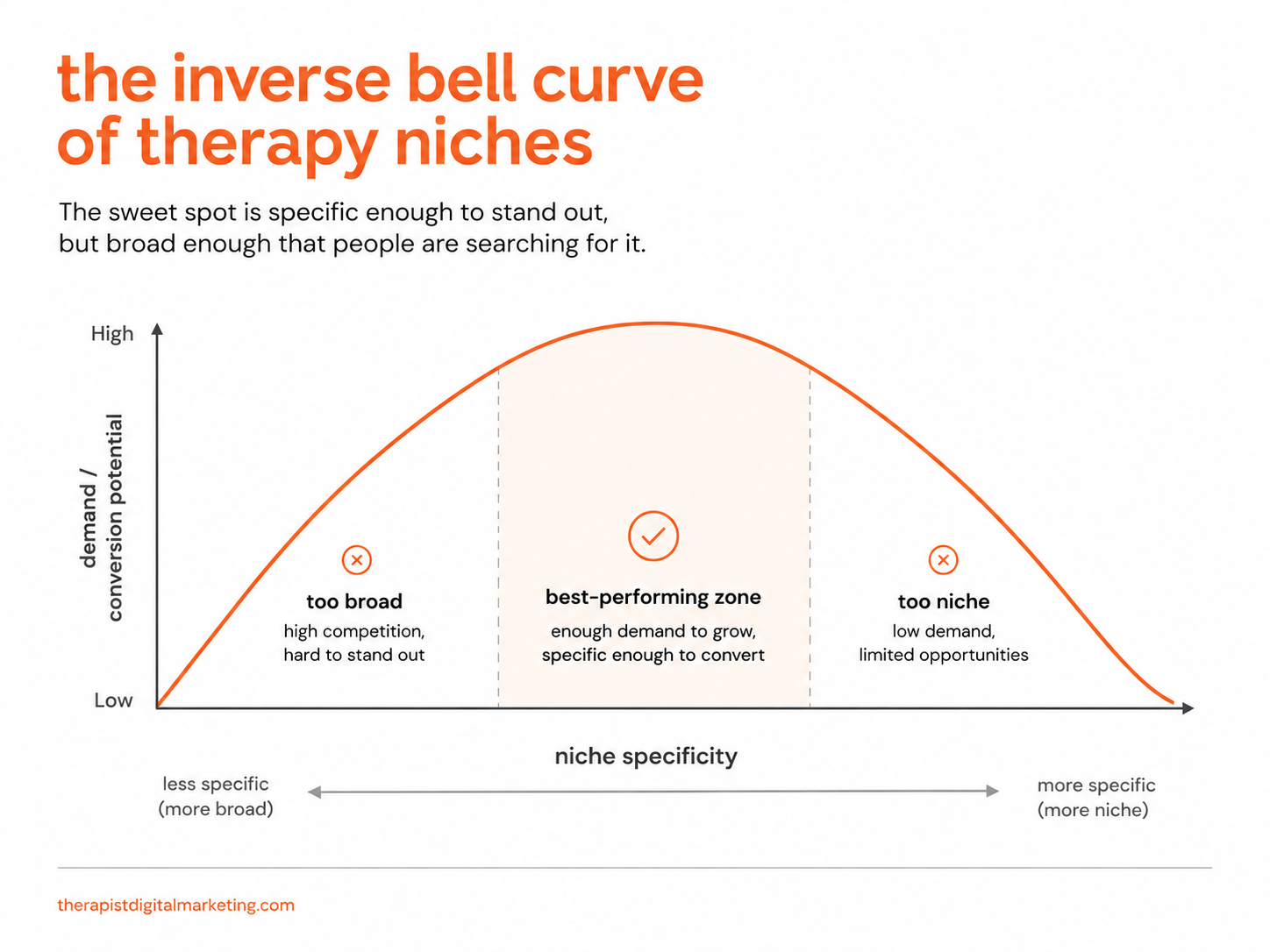
The best niches to sit in the middle:
Not too broad.
Too broad means you blend in.
Not too narrow.
Too narrow means nobody knows to search for it.
The Goldielocks Spot is specific enough to stand out, but broad enough that people are already looking for help.
This is the part I wish more therapists understood before starting.
You do not need the biggest niche.
You do not need the most original niche.
You need a niche that has whitespace, urgency, and a clear reason you’re an expert.
The point is simple: the best performing zone is usually between “everyone does this” and “almost no one knows this exists.”
Why broad therapy niches are harder 🧗🏼♂️
Broad niches are too crowded.
Anxiety therapy.
Depression therapy.
Trauma therapy.
Couples therapy.
Life transitions.
These are all real problems. They matter. People search for them.
And because people search for them, every therapist also wants to rank for them.
But the volume of your competition makes them hard.
If your website says “anxiety therapy,” and every other therapist website says “anxiety therapy,” Google has to decide who deserves to show up.
So does the client.
A broader niche is ok but it needs a sharper angle.
Anxiety for who?
In what life stage?
With what pattern?
In what location?
With what urgency?
You don’t always need to abandon the broad niche per-se.
But you need to make it more specific. Or balance your specialties out with more specific niches
Otherwise your website becomes a menu.
Anxiety, depression, trauma, relationships, life transitions, self esteem, stress, grief.
That’s not a niche strategy. It’s a list of things you can do that just about any therapist can also do.
How many therapist niches should you have?
For most solo therapists, 3 strong niches is enough. You can go up to 5, especially if there is a clear thread between them.
More than that, and the word “specialty” starts to lose meaning unless you’re a group practice.
(Group practices are different)
A group practice can support more niches because there are more clinicians, more specialties, and more ways to organize the site.
But even then, the website cannot become a junk drawer.
Group niches need a structure:
By problem.
By population.
By clinician.
By life stage.
By treatment type.
Otherwise the visitor gets lost.
And confused people do not fill out contact forms.
What if your favorite niche ranks lower? 🙀
Keep it. Seriously!
My report is not telling you to stop doing work you care about.
It is not saying a niche is bad.
It is saying some niches are harder to market than others.
If you love a niche that tends to be tougher, keep it on your site.
But balance it with stronger ones.
For example, you can keep anxiety therapy and add more specific pages around the patterns your clients actually bring in.
You can keep depression therapy and create a sharper page for a population, situation, or symptom cluster.
You can keep broad categories, but stop relying on them to carry the whole website.
You do not need to delete everything and start over.
You need a smarter structure.
Why an in demand niche matters more now than 5 years ago 🧡
The therapy market got crowded.
Demand is still high, but clients have more choices, resources, and knowledge:
Directories.
National platforms.
AI summaries.
Reddit threads.
Psychology Today.
Private practices.
Group practices.
16 tabs open at once.
Your website has to get clear faster.
Get Therapy Niche Performance Report ranking 63 therapist niches 🆓
I ranked 63 therapist niches so you don’t have to cobble together advice from Reddit threads, IG influencers, and vague ideas via some Facebook group.
The free report includes:
63 therapist niches grouped by performance pattern
The top 5 best bets I am seeing right now
A practical way to think about demand and specificity
What to do with your website after choosing a niche
FAQs therapists ask when they are overthinking this
It is based on real Google Ads data across 770+ therapy ad groups.
Not opinions.
Not vibes.
Get the free report below.
You can also read more about what is inside the therapist niche guide.
FAQs
-
Demand depends on your market, your website, your positioning, and how clients search in your area. Some niches show stronger search intent across more markets.
The report breaks this down using real Google Ads performance patterns.
-
No.
A therapist does not need a niche.
But a niche makes your marketing clearer.
It helps Google understand your pages and helps clients see why you are a fit.
-
Most solo therapists do well with 3 strong niches. You can go up to 5 if they connect clearly.
Group practices can support more, but the website needs to be organized.
-
Search for it like a client would. Try “[niche] therapist” or “[niche] therapy in [city].”
If you see therapist websites and ads, that is a good sign. If you mostly see academic articles or general resources, you may need to reframe it in more client friendly language.
-
No. You do not need to delete pages just because they are not your main focus anymore.
Improve what is useful.
Add stronger pages where needed. Your website can evolve with your practice.